API & EDI

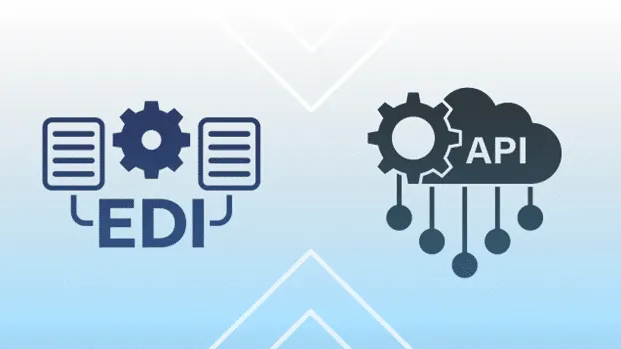
In today’s connected business landscape, the way organizations share data defines how efficiently they operate. Two of the most common methods for exchanging information between systems are EDI (Electronic Data Interchange) and API (Application Programming Interface). While both serve the same purpose—transferring data—they do so in very different ways.
What Is EDI?
Electronic Data Interchange (EDI) is a standardized method of exchanging business documents such as purchase orders, invoices, or shipping notices between organizations. Instead of relying on paper or email, EDI uses structured formats like X12 or EDIFACT, which ensure that both systems can interpret the data consistently.
EDI is often used in industries like retail, logistics, and manufacturing, where companies have established trading relationships and rely on highly structured, batch-based communication.
Typical example: A supplier sends an EDI 850 Purchase Order to a manufacturer, which later responds with an EDI 856 Advance Ship Notice and an EDI 810 Invoice.
What Is an API?
Application Programming Interface (API) is a modern method that allows two systems to communicate directly, typically in real time. APIs use web-based technologies like REST or GraphQL, exchanging data in JSON or XML formats.
APIs give developers flexibility to design custom integrations and instantly update systems. They are widely used in e-commerce, finance, and software platforms, where instant data synchronization improves the user experience.
Example: An e-commerce platform calling a shipping carrier’s API to instantly retrieve a tracking number once an order is shipped.
Key difference
| Feature | EDI | API |
| Communication Style | Batch Processing (Scheduled) | Real-time (instant updates) |
| Data Format | Standardized | Flexible (JSON, XML) |
| Setup Complexity | Requires EDI mapping, VAN or gateway | Requires coding and API management |
| Security | Built-in through intermediaries and validation layers | Depends on implementation (OAuth, encryption, etc.) |
| Use Case | High-volume, structured B2B transactions | Dynamic, on-demand interactions |
When to use each?
Use EDI when you need a structured, validated, and secure data exchange environment—especially if you’re working with established partners or legacy ERP systems.
EDI acts as a middle stage, allowing transformations and validations before data reaches its final destination. This ensures data integrity and compliance, making it ideal for large organizations or industries with strict standards.
Use API when you need real-time connectivity and flexibility. APIs enable instant communication between platforms but typically require more development effort and maintenance. They are excellent for businesses seeking automation, data synchronization, or modern analytics dashboards.
Investment and integration
EDI implementations often require third-party providers, VAN networks, or mapping tools, which can increase initial setup costs but offer long-term stability and compliance. Once configured, EDI systems rarely need continuous coding.
APIs, on the other hand, are developer-driven. They need ongoing coding, authentication, and monitoring to ensure reliability and scalability. However, they provide greater flexibility and speed once integrated—especially when extending data into modern applications, cloud systems, or analytics tools.
conclusion
EDI remains a cornerstone for structured B2B data exchange, offering control, security, and standardization. APIs are driving the next generation of connectivity, enabling live updates and greater flexibility.
For most modern businesses, the best strategy isn’t EDI or API, it’s EDI and API. Integrating both allows you to maintain reliable, compliant processes while embracing real-time automation that keeps your business competitive.